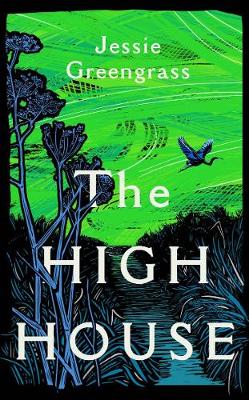
The High House
As seen:
By Jessie Greengrass
avg rating
1 review
Francesca is Caro’s stepmother, and Pauly’s mother. A scientist, she can see what is going to happen.
The high house was once her holiday home; now looked after by locals Grandy and Sally, she has turned it into an ark, for when the time comes. The mill powers the generator; the orchard is carefully pruned; the greenhouse has all its glass intact. Almost a family, but not quite, they plant, store seed, and watch the weather carefully.
A stunning novel of the extraordinary and the everyday, The High House explores how we get used to change that once seemed unthinkable, how we place the needs of our families against the needs of others‒and it asks us who, if we had to, we would save.
‘Jessie Greengrass is a master observer of inter-human atmosphere. The High House is about the great crisis of our time but is an unconventional domestic drama performed on an intimate stage.’ – Max Porter
‘The future imagined in this brave, important and exquisitely written novel is a frightening one. But even the darkest times are lit by moments of beauty and grace, and the reader is uplifted by Greengrass’s conviction that salvation lies not in competing with one another to survive but in uniting to help those we love.’ – Sigrid Nunez
TweetReviews
St Just Thursday Evening Reading Group 5th January 2023.
The high house. Jessie Greengrass.
In general the group all agreed that this was a very good book: readable and even “unputdownable”; and an honest and balanced account which was admirably free of sentimentality. One reader thought it should be compulsory reading for people in power. Some of the group, however, found it too upsetting, especially since the reader becomes aware that there can be no happy ending. Others, though, thought that the book looked as if it were going to be depressing, but actually wasn’t.
We discussed the issues of Pauly’s inability, or unwillingness, to talk to the rest of the house’s inhabitants, and concluded that this was not innate in Pauly but signified something else, possibly that no one was listening. We wondered about the storage of water during the drought, and found it strange that this was not mentioned; also we thought it unlikely that the house and the family would have remained totally isolated and undiscovered by outsiders.
Obviously, the book raised many other large-scale issues. We talked about some of them, in particular the varied human responses to climate problems – such as, the balance of whom to try and save in an emergency: as many people as possible, or one’s own family; oligarchs and the super-wealthy who try to set up bunkers for their own longterm survival; the value of small but well-meaning efforts on the part of the population, such as recycling and walking to work, and whether it is, or is not, too late for these to be useful, and why; the value of our vote under the present system and what our MPs do or don’t do for us; and whether it is or is not a good idea to bring children into the world as it now is.
This book poses a mega-storm and flooding in Florida as one of the sudden and dramatic events which leads to the dystopian scene of the narrative. We noted that, while we were sitting round the library table on a rainy evening in Cornwall discussing all this, a “bomb cyclone” was arriving on the coast of California and had already caused casualties.