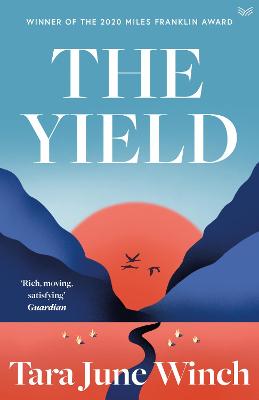
The Yield
As seen:
By Tara June Winch
avg rating
1 review
WINNER OF THE MILES FRANKLIN AWARD 2020
An exquisitely written, heartbreaking and hopeful novel of culture, language, tradition, suffering and empowerment
Reviews
St Just Monday Morning Reading Group 28th October 2024.
The Yield. Tara June Winch.
This book generated a very interesting discussion. Some readers disliked it intensely and did not finish it, finding the content boring and depressing, and Albert Gondiwindi’s dictionary of Wiradjuri words too difficult to relate to as part of a novel. Several people were confused by the narrative being told from the three different and interspersed perspectives of August in the present day, Albert Gondiwindi, her lately deceased grandfather telling his story from the past, and the letters of the old mission minister. Also quite a number of people found that the book was ‘hard to get into’. (It should be noted that one of the less enthusiastic readers later changed her opinion to a more favourable one).
However, other readers thought it was a wonderful book, an excellent read, highly unusual and interesting, riveting and thought-provoking, the richness of detail describing the place where August lived being so lyrical and beautiful as to buoy the reader up through the grimness of her family’s situation in society (others found this more difficult to take and were overwhelmed by the injustice and hard living experienced by the First Nation people).
We discussed how the author’s ethnicity as a First Nation Australian gives authority to her writing, and we talked about other such authentic accounts that we have read. We noted that in this book, the First Nation people are not portrayed simply as victims, but take responsibility for their own destiny. We also tried to consider, in the light of the Reverend Greenleaf’s paternalistic attitude to his mission’s involvement in the area (though the Reverend did change his opinions somewhat and took a stand against the brutality with which the people were treated), whether things have changed for the better since the nineteenth century; this led to a conversation about slavery, modern and historical. In the end we couldn’t decide whether the world is a better place now, or not.
A good reading group title, provoking a wide-ranging discussion about the topics raised in the book, and widely differing opinions about the story itself.