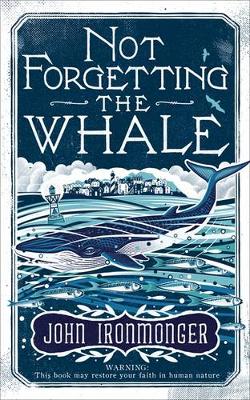
Not Forgetting the Whale
As seen:
By John Ironmonger
avg rating
1 review
When a young man washes up, naked, on the sands of St Piran in Cornwall, he is quickly rescued by the villagers. From the retired village doctor and the schoolteacher, to the beachcomber and the owner of the local bar, the priest’s wife and the romantic novelist, they take this lost soul into their midst. But what the villagers don’t know is that Joe Haak has fled the City of London fearing a worldwide collapse of civilisation, a collapse forecast by Cassie, a computer program he designed. But is the end of the world really nigh? Can Joe convince the village to seal itself off from the outside world? And what of the whale that lurks in the bay? Intimate, funny and deeply moving, Not Forgetting the Whale is the story of a man on a journey to find a place he can call home.
TweetReviews
St Just Monday Morning Reading Group 29th September 2025.
Not Forgetting the Whale. John Ironmonger.
This book appeared to produce mixed reactions from several readers. One or two of the group had read it before, and their second readings brought them slightly different emphases. One reader struggled with it and did not grasp the premise of the story, she said. Others found it interesting, readable, and thought-provoking.
The descriptions of human co-operation in time of crisis, of people coming together to help each other, was a refreshing change, we thought, from the usual doom-laden accounts of violence and desperation in many other examples of apocalyptic fiction, and this was compared with what happened (at least in our own town) during Covid, when many groups formed to offer support and food deliveries locally.
Several people commented that the book was amusing, ‘good fun’, and an entertaining and absorbing read. But there were elements of it that were less admired – after some discussion, we decided that one of these was the way in which the story is framed: alongside the serious concerns that the book is dealing with, setting it out as almost as a fairy-story (several readers made this comparison; one said ‘Brigadoon’, or an uncertain legend), seemed inappropriate. The quirky fictional Cornish place-names were also denounced (this group is local to the setting of the book). Additionally, some thought the characters were stereotyped, and the ending somewhat contrived.
We talked about other fictional representations of pandemics, such as the films ‘Contagion’ and ‘The Stand’, the TV series ‘Survivors’, and John Wyndham’s books – all of these being concerned with the way people behave in these circumstances. We noted that in all of them, big cities tend to be abandoned and settlements set up in rural areas.
The electronic system “Cassie” was thought convincing, and the contrast between the City and its financial machinations and the village St Piran, was noted. Readers also commented that Covid (partly due to the rollout of vaccinations) was (thankfully) not as bad as the pandemic in this book.